
The Quantum Theory of your Life
#280: what carlo rovelli, ancient indian thought, and sneaky art have in common.

Dear reader,
Your art should reflect your curiosity. It was curiosity for my new world - when I was an immigrant in Chicago - that led me to sit in cafes with a sketchbook and pen. I wanted to better understand the people around me. I needed to learn how they moved through this foreign environment that I was beginning to call home.
Curiosity helped me discover art in ordinary places. But if I was not carrying a sketchbook that day, if I had not put myself in the business of looking for something, how would I describe that otherwise ordinary day? Does the business of looking, by itself, make our time more precious? Does the act of observation make the world beautiful?
At the heart of this thought, there is agency, self-determination, and free will. But there is also quantum theory.
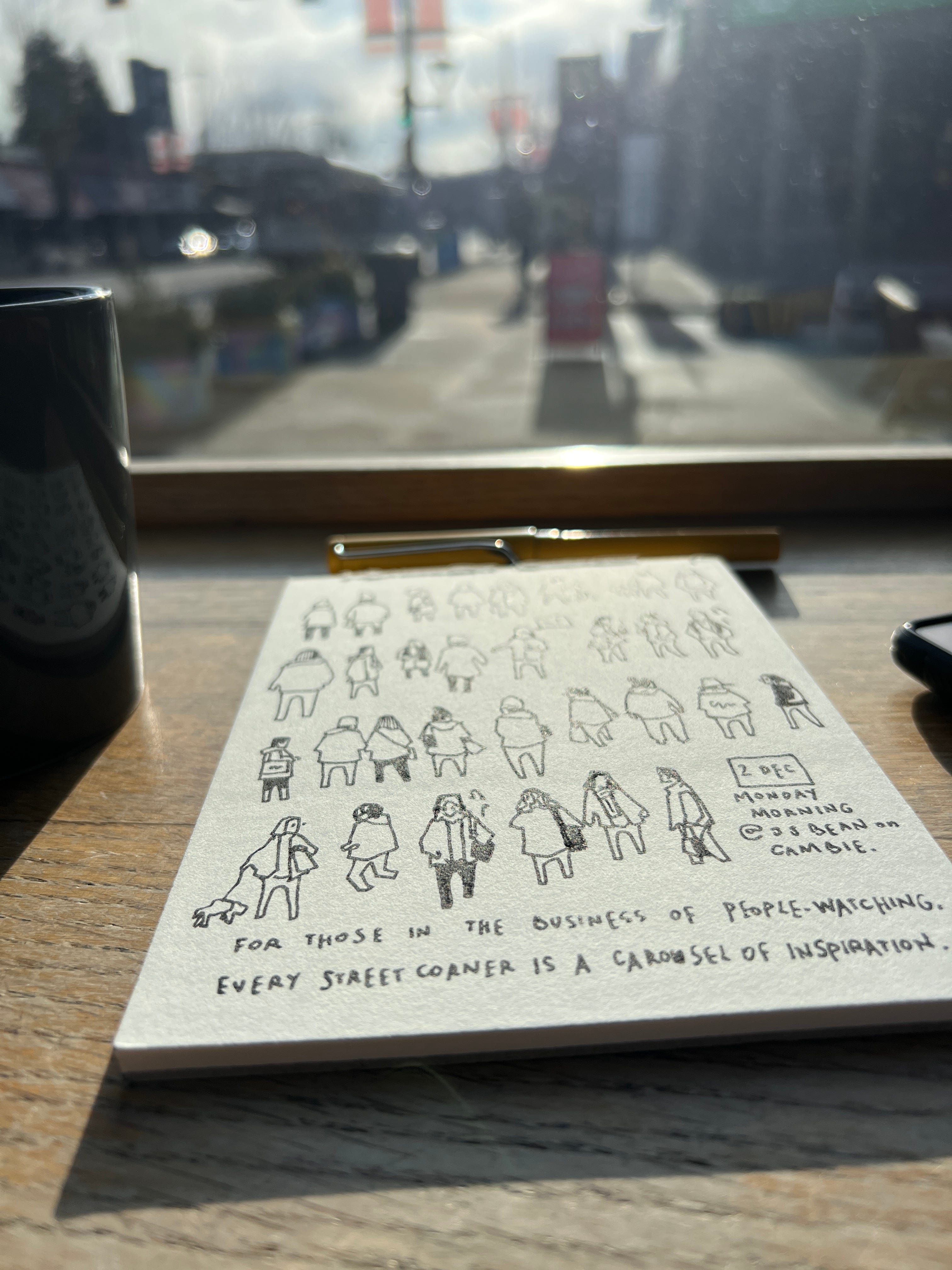
In my workshops, when discussing page composition, I like to run the following thought experiment:
Is a building tall, if there is no person to measure it against? Is a cafe still a cafe, if no one is inside drinking coffee?
In this way, I communicate the why of my art, and embed my curiosity at the center of the action. The idea that that human presence gives meaning and context to the urban environment. This is also the why of a city, of every city anywhere in the world.
This week, I found resonance in a book by my favourite science writer.
The SneakyArt Post is a newsletter of secretly drawn art of the world. Every week, I share the latest pages from my sketchbook, and the best ideas from my journey as an artist and writer.
Did you catch last week’s book announcement? I made a book!

I am reading Helgoland by Carlo Rovelli, my favourite science writer. Rovelli begins with the history of the discovery of quantum theory, how it forms the bedrock of all modern scientific and technological progress, and how no one fully understands how it works. (And in this week’s post of the Marginalian, I was delighted to learn that Maria Popova just finished reading it.)
As technology allowed us to study smaller and smaller particles, it was quickly realized that the world at the quantum level does not behave according to the laws of classical physics - which explains the movement of cars and planets, of particles and waves, and all the ways we understood things to work in high-school science.
In his book, Rovelli explains various models we have to make sense of quantum physics, and what they mean for our understanding of reality. Then he introduces the one he finds most convincing - the relational understanding of quantum theory.
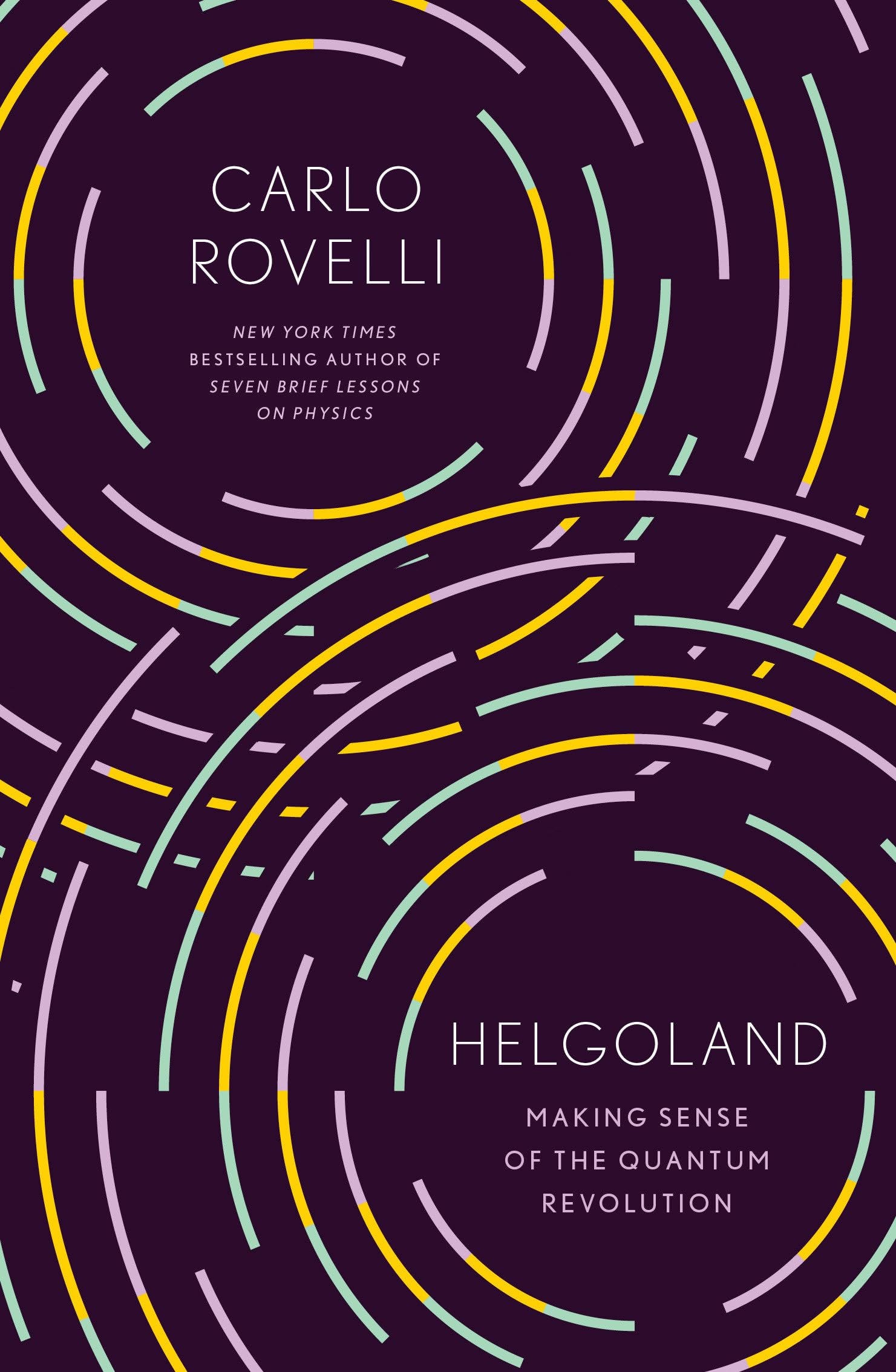
Simply put, it is the idea that nothing is just itself. Everything that exists is what it is in relation to some other thing. For example, a stone is hard only with respect to how something else touches it. A light is red only with respect to how an eye (or lens) perceives it. A fire is hot based upon how we experience its heat. And a city is beautiful only when a person observes it as such.
“The world fractures into a play of points of view that do not admit of a univocal, global vision. It is a world of perspectives, of manifestations, not of entities with definite properties or unique facts. Properties do not reside in objects, they are bridges between objects. Objects are such only with respect to other objects, they are nodes where bridges meet. The world is a perspectival game, a play of mirrors that exists only as reflections of and in each other.
This phantasmal world of quanta is our world.”
One of the foundational principles of Jainism (the religion to which, in a technical sense, I belong) is the principle of anekantavada. It means that reality is multi-dimensional and any human only has access to their own perspective. In this world of mirrors and reflections, we can only appreciate the limits of our own supposed understandings, and extend empathy towards those we consider to be wrong. Because they also only have their own perspective.
(So while Jainism has strict rules about how to be, it suggests no way to impose them upon others.)
Jainism also states that ultimate reality can be experienced, but cannot be communicated in language. I could never become a physicist, and I do not have the training to be a philosopher, and I lack the dedication to be truly religious, but through art I think I have always searched for an ultimate reality. After being in love with words my whole life, I realized writing was too political, too parochial, too open to misinterpretations. An implicit goal of my art practice was a way to shut down the words, and reach that place where I could translate my reality onto the page without language getting in the way.
It works sometimes.

Sneaky Art is created at the intersection of worlds. Wherever worlds collide, where strangers mingle with one another, sneaky art is spontaneously produced. It is an art of inter-relations, of bridges between objects, of particles colliding inside a vast universe. The observer, the artist, is part of it too.
What we see, and sense, gives meaning and definition to our world. What we put down on the page is a factor of who we are, what we notice, and what casts its impression upon us. So a sketchbook is a logbook too, of high-speed experiments happening in real-time. Every line and shape is an observation by a wayward explorer, creating and destroying, raising probabilities and collapsing the wave functions of their world.
After much procrastination, I announced my book on instagram. I don’t know why I was procrastinating. Maybe because social media never gives me the returns I think I deserve? I try not to care about the numbers, but it still gets to me.
In case you missed the post last week, I made a book and you can …

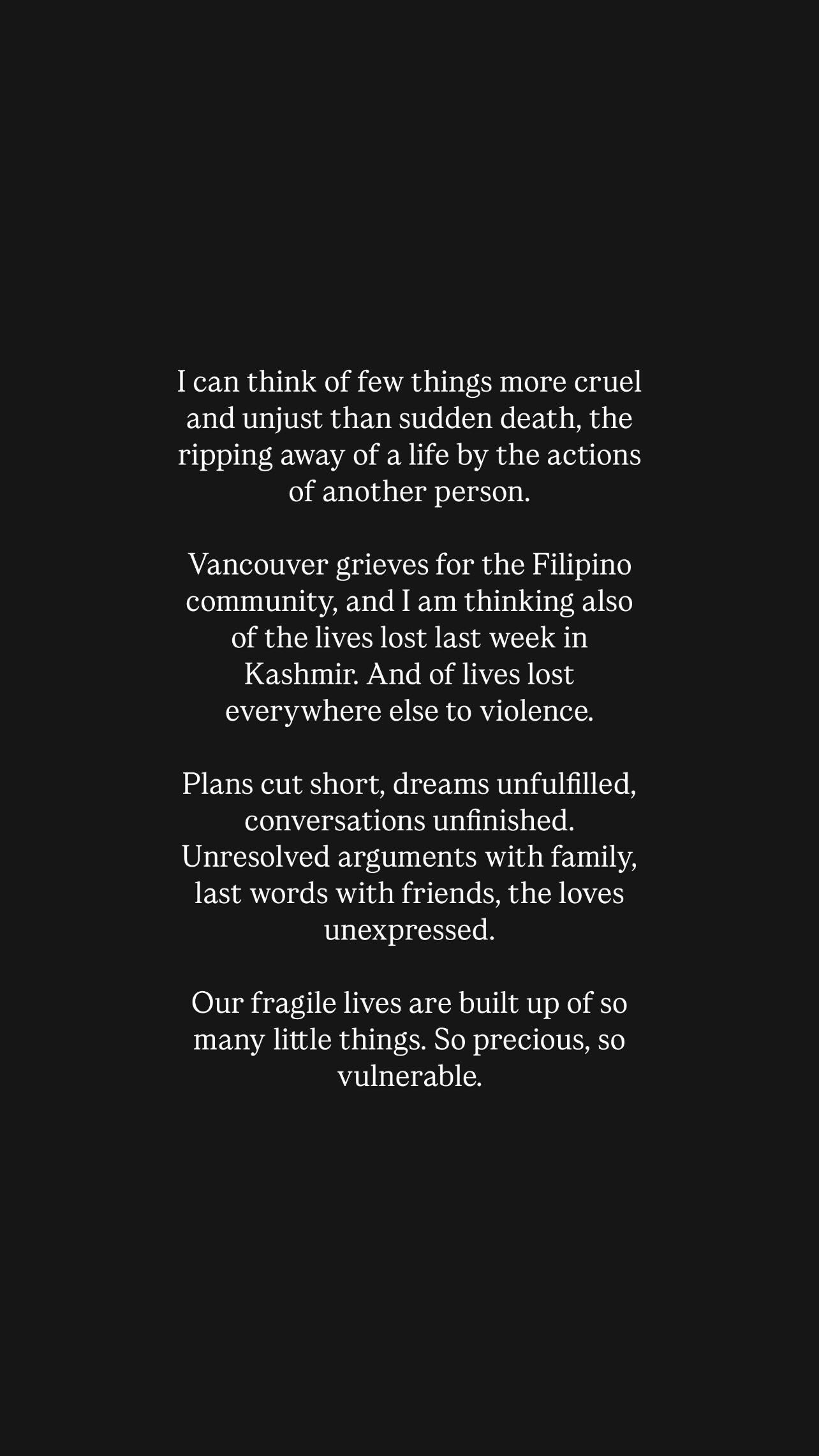
A word on the awful incident in Vancouver last week.

Your world is not only different from mine, it also changes as you change. The deeper meanings aside, perhaps this means a sketchbook - and the business of looking for beauty - can quite literally make your world more beautiful?
Or maybe not. Maybe it is an illusion I choose to believe. As the poet said, “Use your illusion, one and two.”


Thank you for reading. I have more to tell you next week.
Inter(sneaky)being.
Through art--you do--express the infinity in a moment...Yes, thanks...