
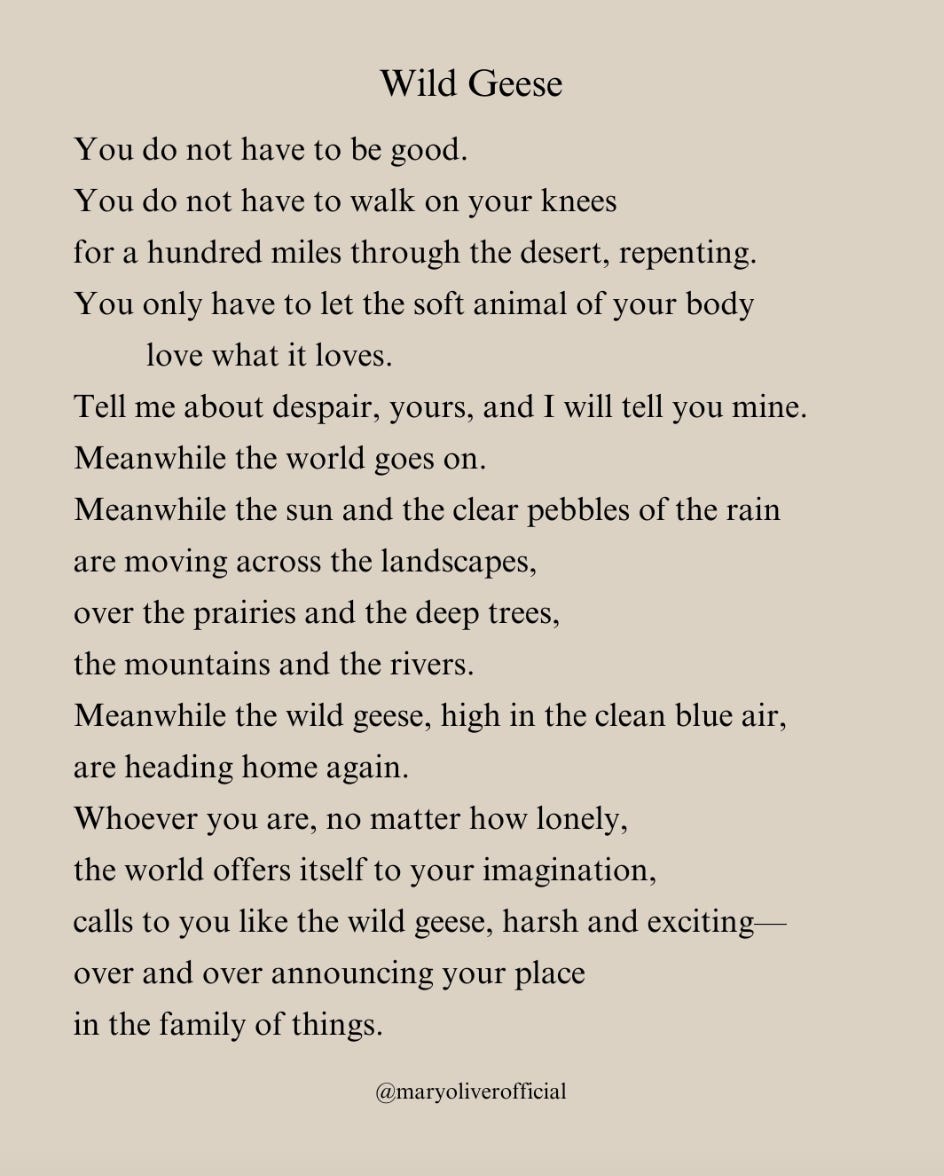
Let the soft animal of your body love what it loves
ideas of wonder, curiosity, and attention, from nature journaling at the edge of the world.

Dear reader,
Did you know there are people who just know trees? Who can hear a bird in the sky and tell you which bird it is? Who, even when they don't know which bird or tree, hold wonder and joy for things of nature?
Reader, do you know we are also things of nature?
I spent a week on an island at the edge of the world, with 50 nature journalers, ostensibly to teach them things, but I came away with so much learning of my own.
In today's post, small ideas to redeem yourself and save your world.
👋🏼 New readers, read this quick reintroduction to my work and myself.

You do not have to be good
This week I was one of three instructors with the Wild Wonder Foundation at a Nature Journaling retreat on Bainbridge Island. We began each day with a poem read twice, because a good poem should always be read twice.
John (or Jack, once you know him) is a writer, artist, naturalist, educator, and co-founder of the Wild Wonder Foundation. I learned about his work when we spoke on the SneakyArt Podcast. Our conversation was a true joy. Listen here.
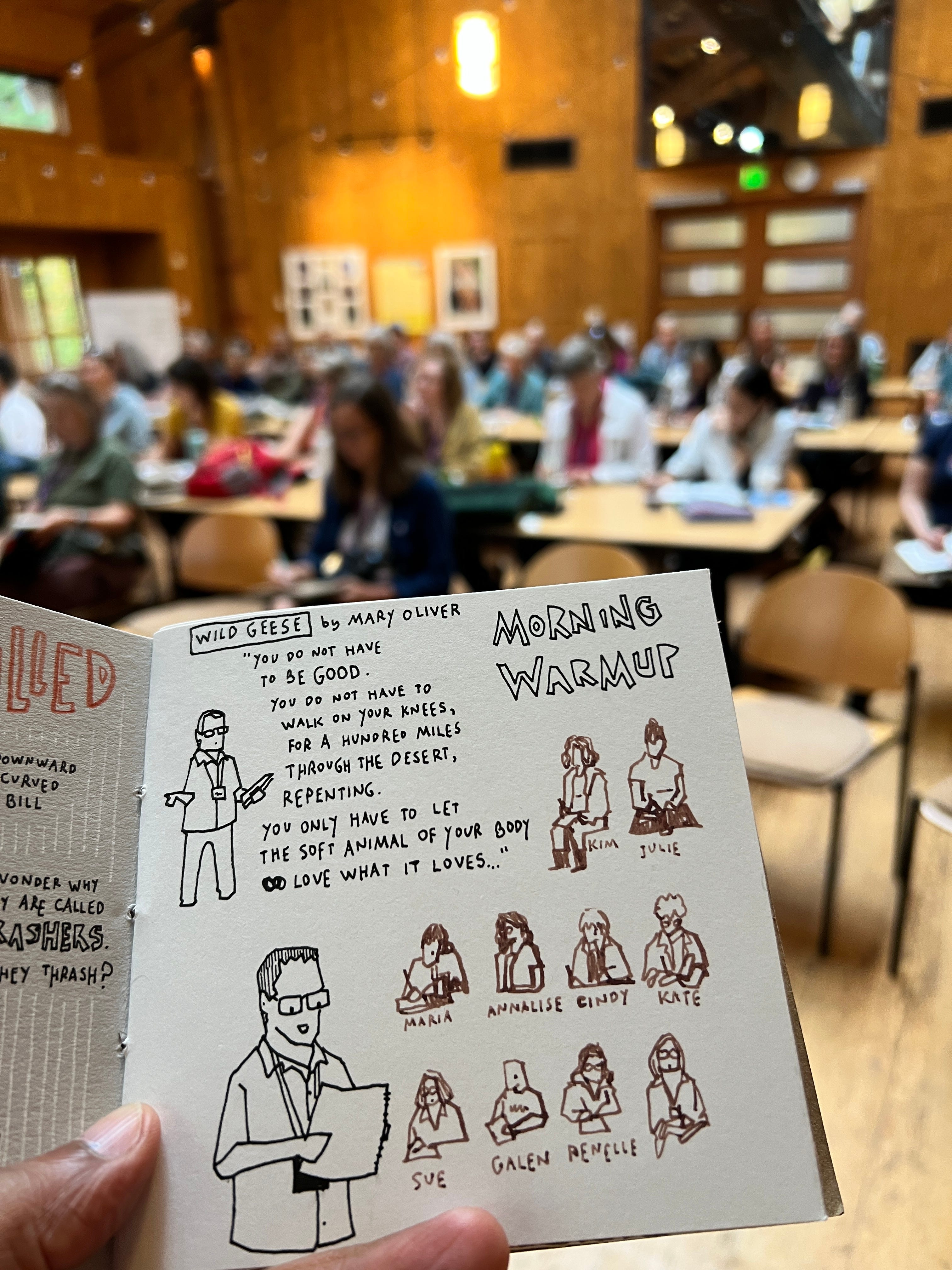
The poem begins - You do not have to be good - with a rejection of conventional ideas of good and evil, institutional morality, and organized religion. The poem ends - in the family of things - with the acknowledgment that we are but distant kin to the trees and the squirrels and the wild geese and the wind.
Reader, do you know your place in the family of things?
Other people help us be ourselves
Growing up, I had to defy my environment to protect the dream of becoming a writer. When I introduced myself to fellow nature-journalers, I spoke about my blog and webcomic, about writing stories, poems, and TV scripts, only after my day’s work as a student of engineering. I spoke about leaving my PhD program to become a novelist, and the sudden, insurmountable writer’s block that marooned me in limbo. I spoke about finding art through urban sketching and the wonderful communities in Chicago and Minneapolis that showed me the way.
I spoke about the slow realization that we need other people. And the keyword is permission. Other people, by virtue of being themselves, give us permission to be ourselves.
The individualist in me bristles at the idea of needing permission. But, reader, I am growing, and learning my place in the family of things. This week, other journalers showed me how to reserve space for wonder for the richness of our natural environment.
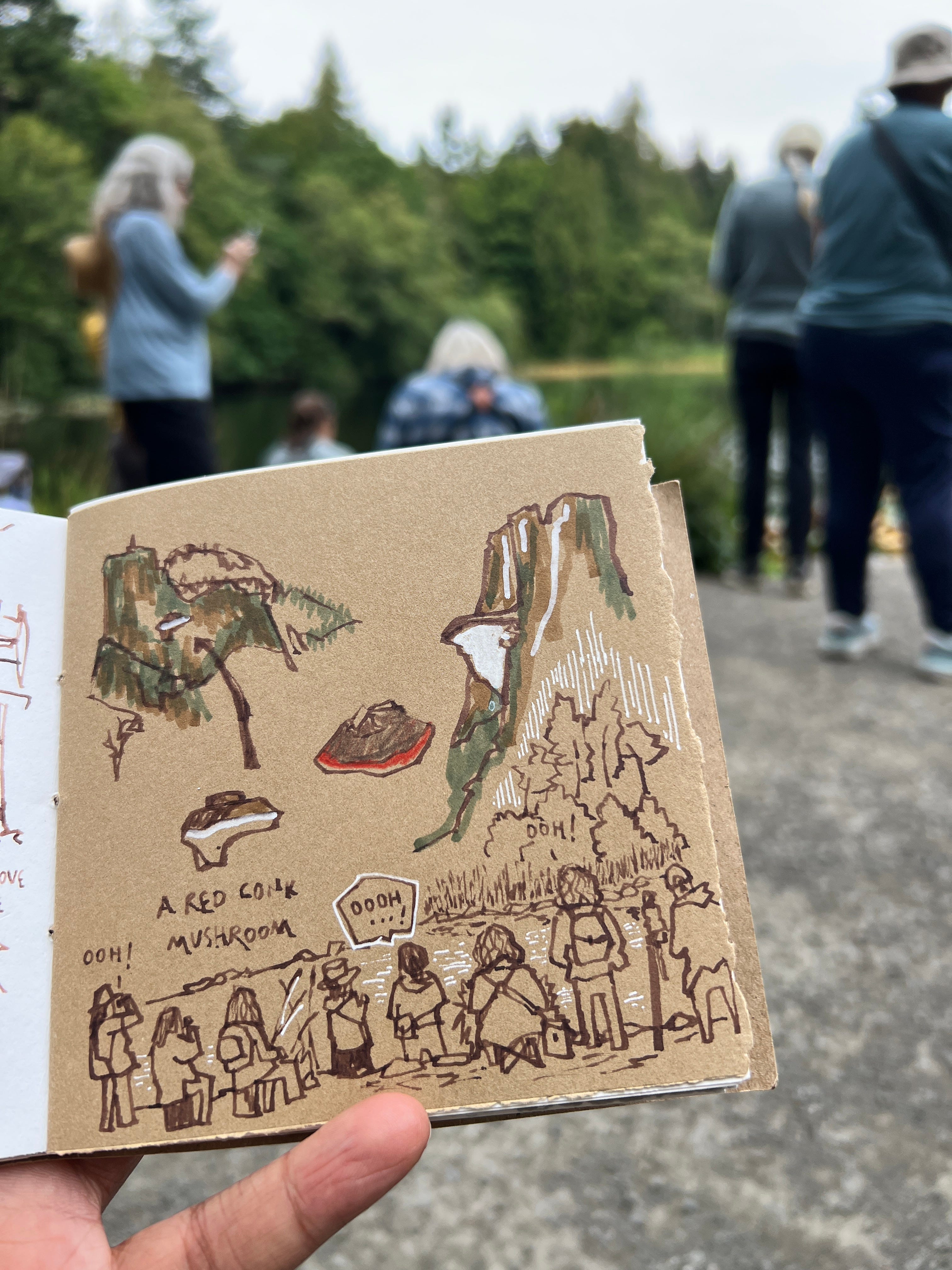
To see things without recognizing them
Our brains are saturated with images from around the world, thrown at our eyeballs (at 24 fps) by the screens that control our attention. Over-saturation makes us insensitive to the beauty of our world, because everything has been seen, and everything is already known. It leaves no room for questions, ideas, curiosity, or original thought. There is only consumption. Your phone is a thought-terminating cliche that kills your human spirit and reduces you to a passive vessel for algorithmic monetization and ad revenue generation.
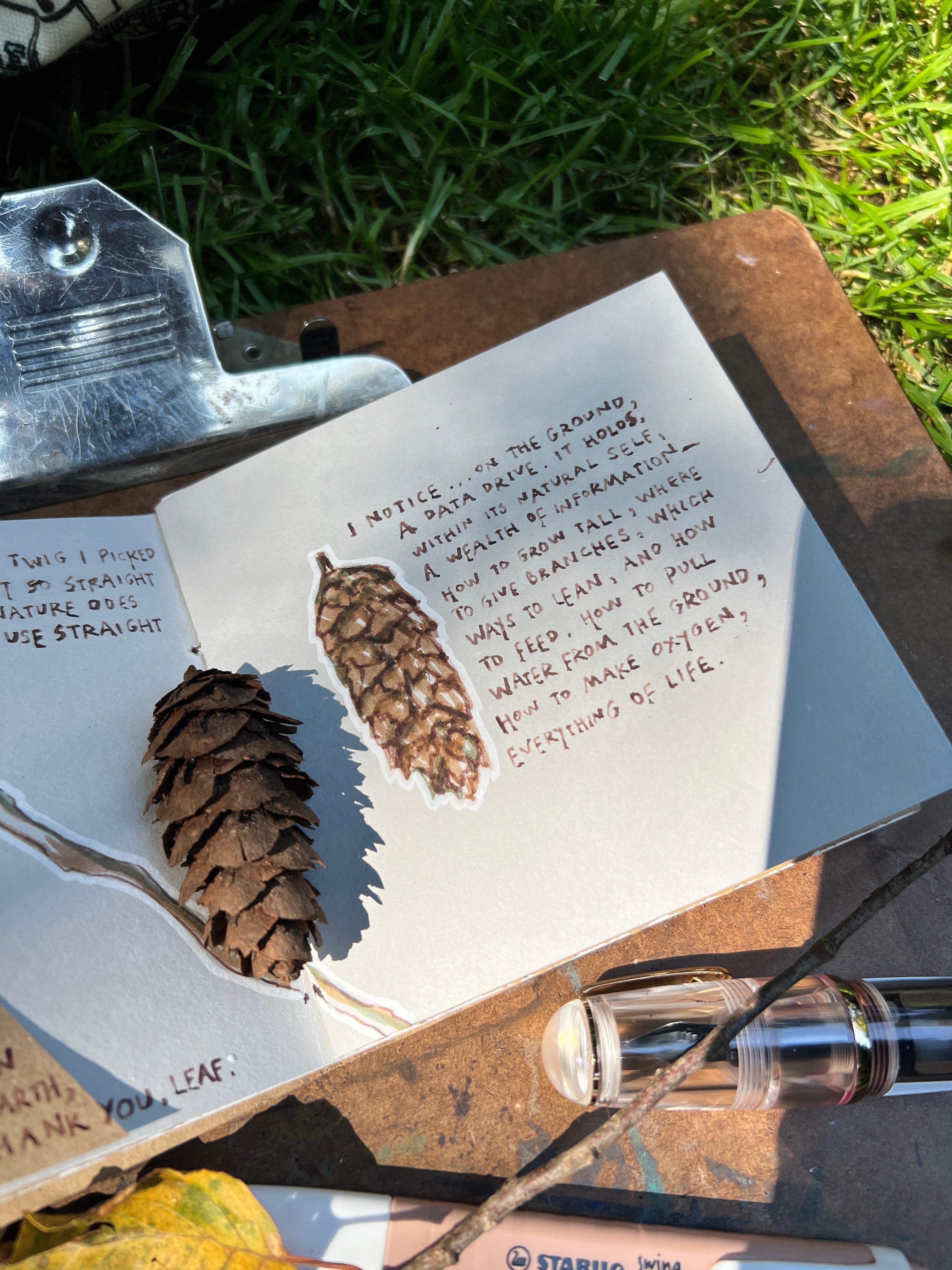
To really see the world, we must reject our own pre-suppositions, prejudices, and foreknowledge. This was the 19th century idea of phenomenology, key to my existentialist understanding of tiny people. When we draw with curiosity, we learn to see with fresh eyes, activating our exploratory mindset, discovering the everyday wonders of our world.
This week, I hardly checked my phone and posted nothing on social media. Reader, how do you escape your phone?
My little (big) idea to save the world
At the Aspen Ideas Festival earlier this summer, and on Bainbridge Island this week, I structured my workshop around my little (big) idea to save the world.
I shared it also on the back cover of my upcoming book - Make (Sneaky) Art.
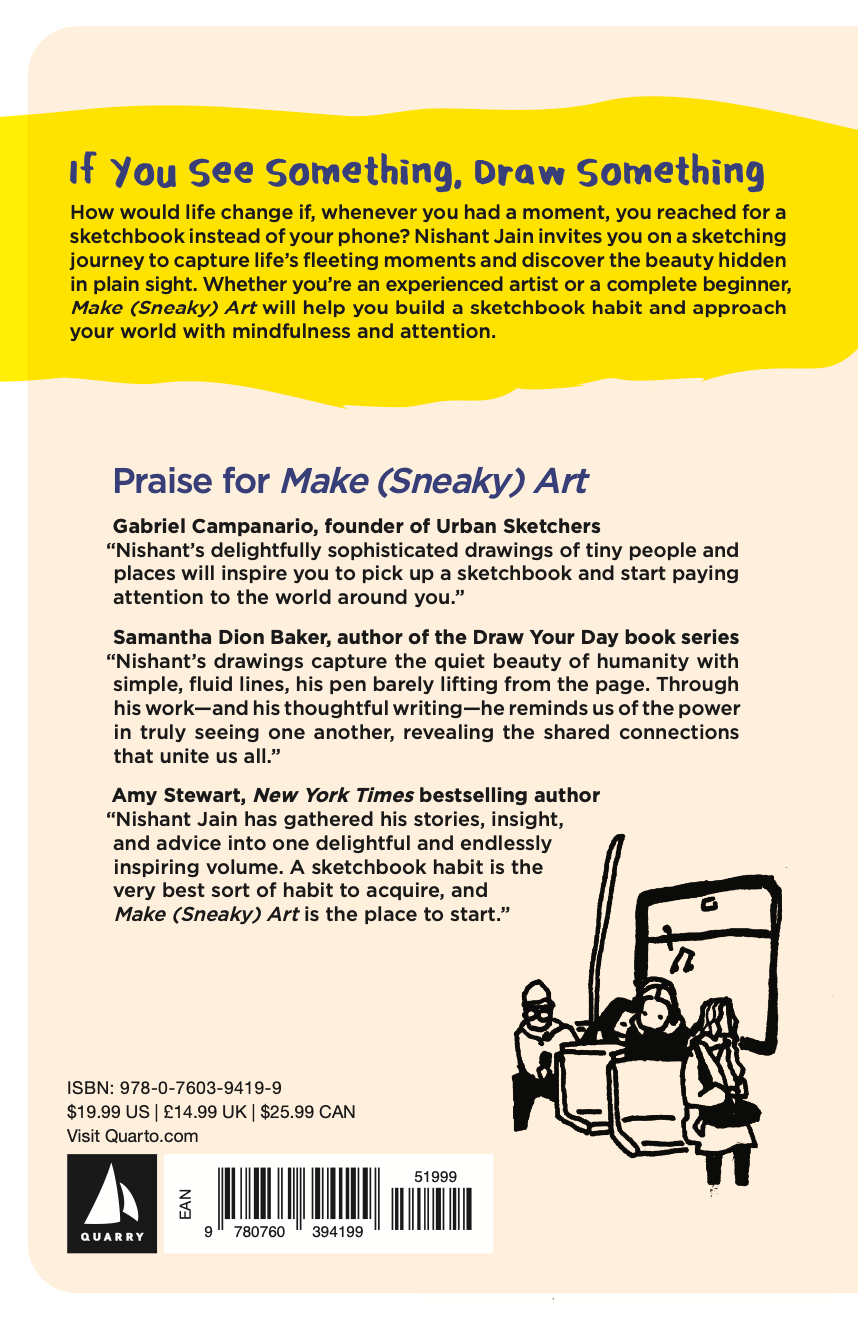
A drawing habit does not need a large chunk of your day. You do not have to reorganize your entire life around it. A drawing habit, I suggest, could fit inside the interstitial spaces of your daily life. Five minutes? A tiny sketchbook in your pocket can be a device for exploration, a space for ideas outside of language, a compass for your curiosity.
This week, my idea was affirmed by other journalers who learned to draw in five minutes and expressed their curiosity on the blank page.
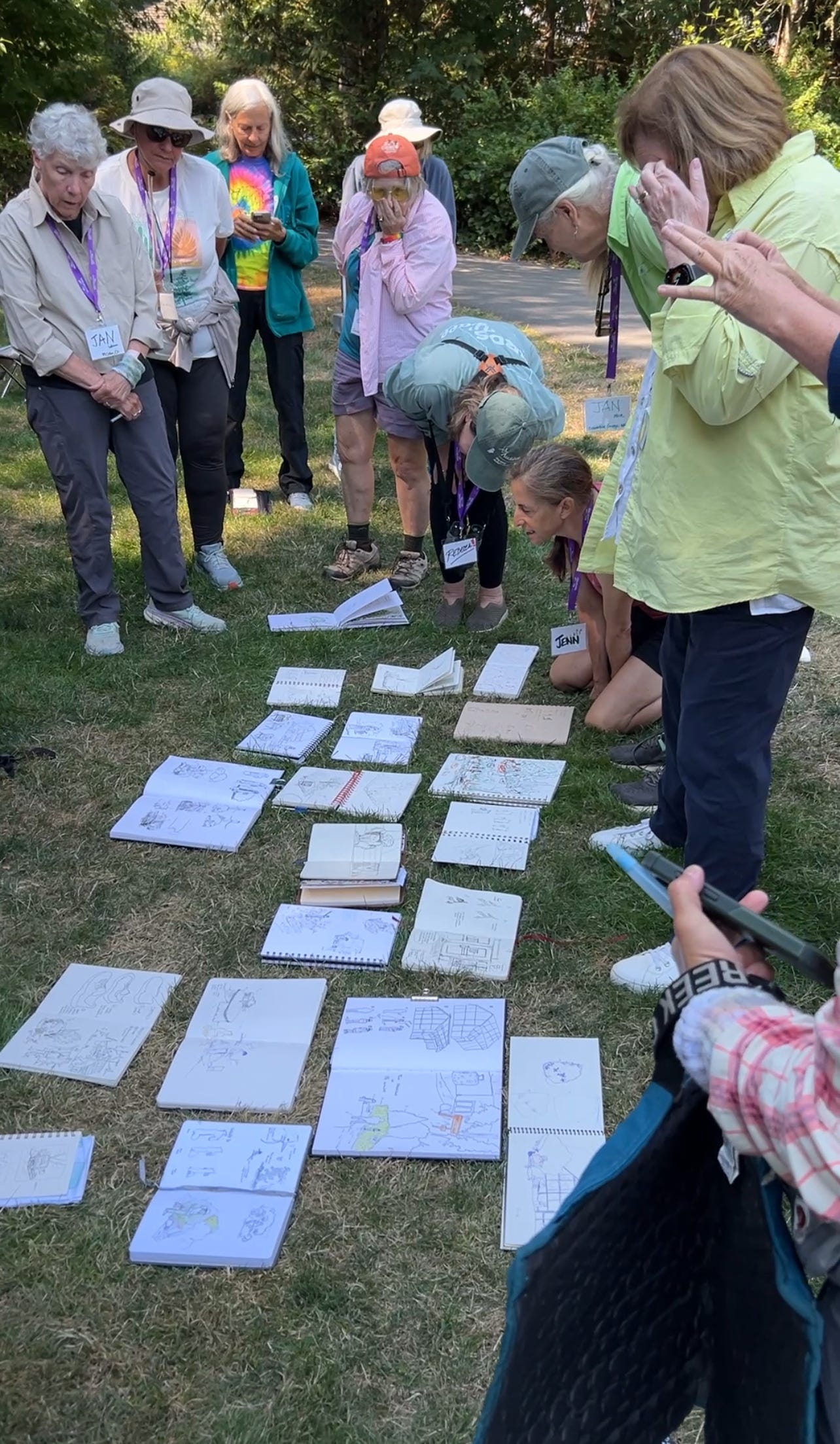
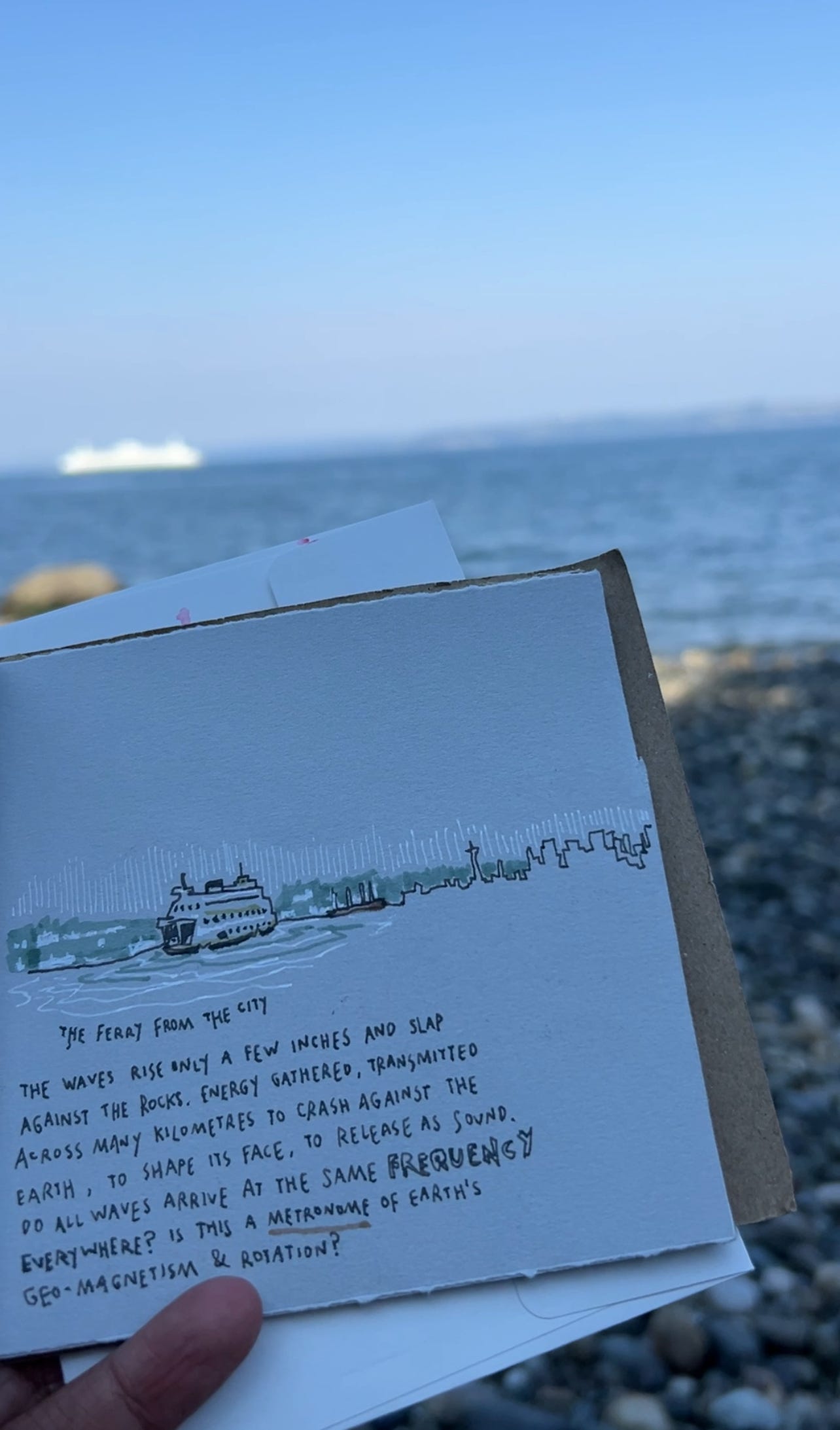
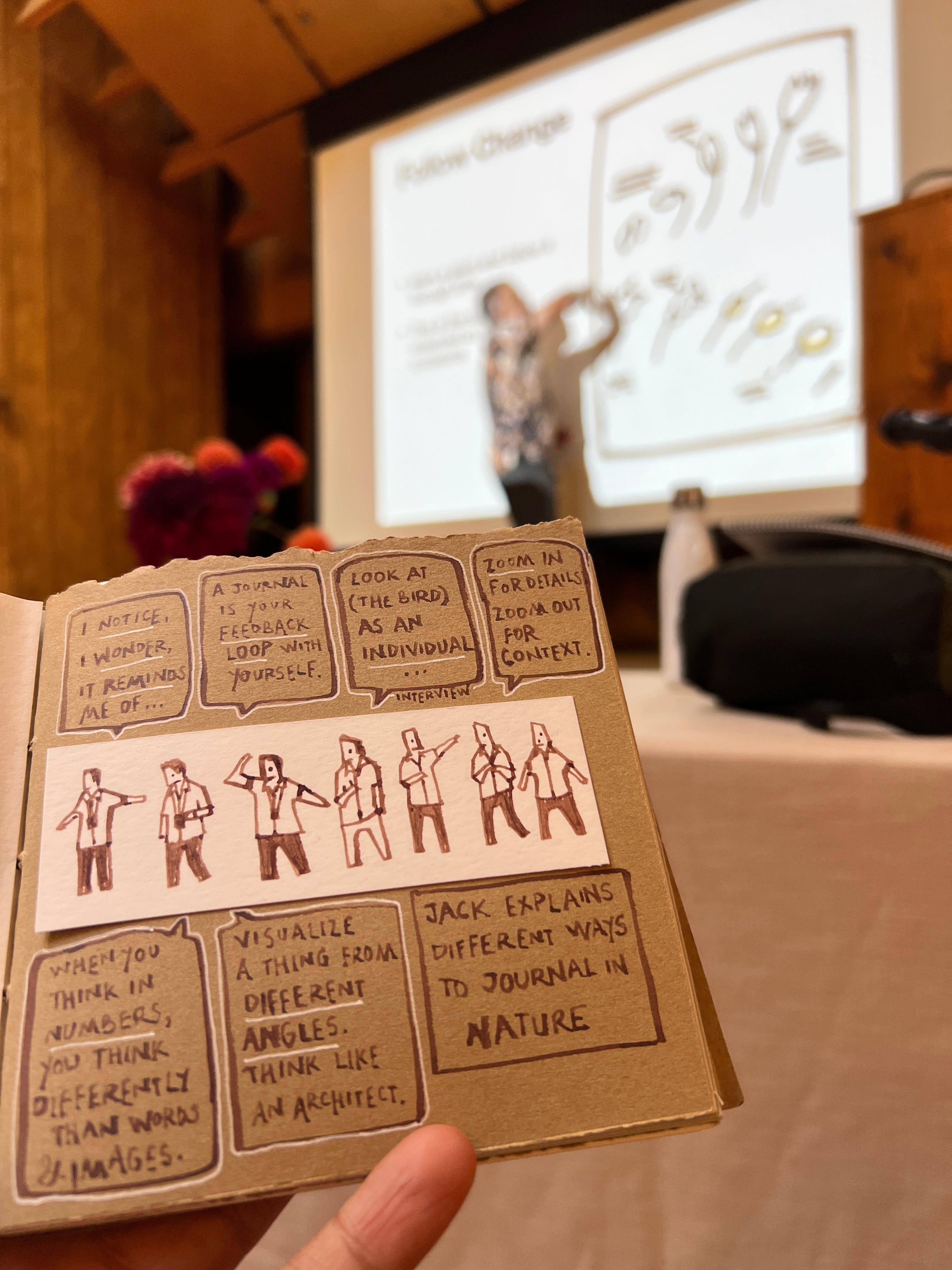

Reader, were you at Bainbridge Island with us this week? Please say hello in the comments!
Next week, I will begin sharing event listings for my book tour. Exciting times! Thank you for reading.
The SneakyArt Post is a newsletter of secretly drawn art of the world. Every week, I share the latest pages from my sketchbook and the best ideas from my journey as an artist and writer.
Hi Nishant! Thoroughly enjoyed your workshops at Bainbridge as well as your philosophies! Also appreciated your help with my own drawings.
Kelly
Hello again, Nishant!
I just signed up for your newsletter and am looking forward to reading more of your writing and seeing more of your art
You have written about your experiences beautifully. Being on the retreat was such an incredible experience, full of inspiration, fun, and so many helpful lessons. I loved your classes, and I loved Jack's and Kate's as well, and getting to meet all of the wonderful nature journalers, and be around the plants and animals we got to see in the forest. Thank you so much again!
All the Best,
Donna