
The book (almost) did not happen!
#283: on the start of my adventure to write "Make (Sneaky) Art"

Dear reader,
Have you battled Imposter Syndrome at the cusp of a great opportunity? How did it feel? How did you respond?
Good advice states clearly that, when approaching literary agents, one should develop a thick skin. Good books by great writers are rejected for all kinds of reasons that have nothing to do with the work or the writer. Do not take rejections personally. Keep pitching. Keep querying. Keep calm and carry on.
But it is one thing to know good advice and another to follow it. Back in 2023, I got rejections from two - only two! - literary agents and I am ashamed to say I took it quite poorly. I let it crush me. I went down a spiral of self-doubt. I convinced myself I was not good enough.
Then, a few weeks later, I was approached by Quarto Publishing with the idea to make a drawing guide based on my art practice. And my first instinct was to say - No, I am not good enough.
This book almost did not happen! In today’s post, that story.
The SneakyArt Post is a newsletter about secretly drawn art of the world. Every week, I share the latest drawings from my sketchbook, and the best ideas from my journey as an artist and writer.
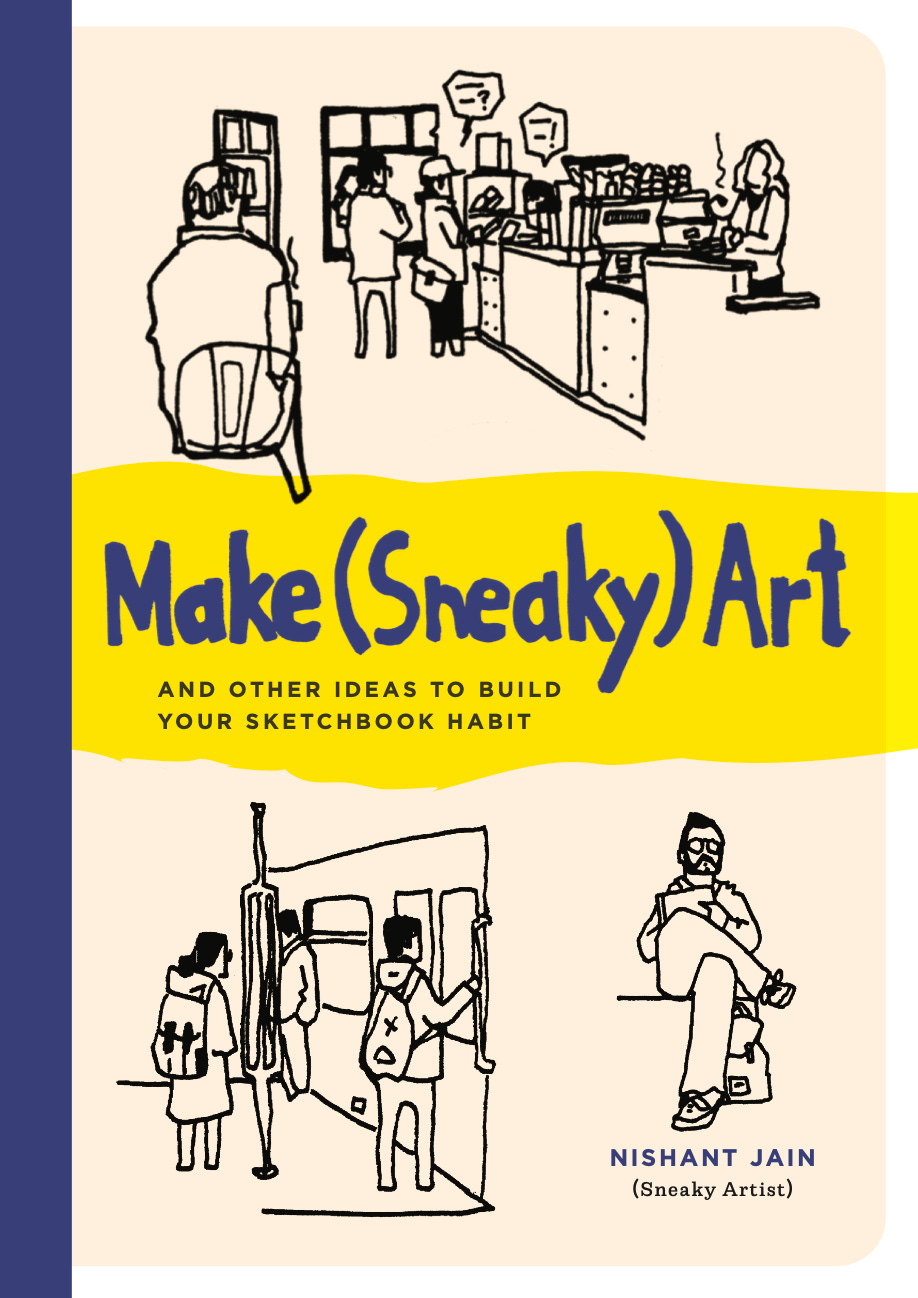
My best drawings and ideas are packed into my upcoming book, which you can preorder now!
Approached to write a book in the urban-sketching genre, my first instinct was to turn down the offer, because why would anyone want to learn from me? This is an unshakeable feeling, despite the numbers of participants in my workshops, despite the growing readership of this newsletter.
(For instance, I am planning book events for launch week now, and I keep thinking - “What if no one shows up… at all?”)
My second instinct was also to say no, but for a different reason: I do not read a lot of how-to books. I am not good at following instructions. I would rather reinvent the wheel than take good advice given freely. I would rather fumble first and ask questions later. I am impatient. I am contrarian. And I learn the hard way - by doing and re-doing.
I asked: Am I the right person to write such a book?
Their response: Why don’t you write the kind of book that someone like you would read?
Check-mate. I could not resist the challenge.
First, it gave me the creative freedom to design the book as I would like.
Second, it made me very curious. What exactly do I want from a drawing guide?
Third, I have learned that the only way to live with an Imposter Syndrome is to not let it dictate terms.
(Bonus reason: No writer should give up the chance to have their work read by professional agents, marketers, and editors.)
This was the challenge I am sought to meet with Make (Sneaky) Art. The book has gone through multiple rounds of planning, writing, editing, and a couple of complete revamps. At every stage, I have pressed the editors for unfiltered, honest advice. I wanted to get it exactly right.
And now, on the other side of this adventure, I am proud to be able to say - This is a how-to book even someone like me would read.
Make (Sneaky) Art
How would life change if, whenever you found a free moment, you reached for a tiny sketchbook instead of your phone?
We need to pull away from our screens and re-immerse in our real, physical worlds. We need to re-engage with our communities, and the people with whom we share our urban environments. We need to reclaim our attention spans, and build mindful creative habits. Making art, any kind of art, is a way to reaffirm our humanity in an increasingly inhuman world. I wrote this book to help with that.
📝 After placing your order, fill this form to be part of an exclusive reader-giveaway!
📚 On the Subject of Making Books
Last week, I made a sketchbook with SneakyArt Insiders.
We are doing Round 2 next week. Grab the special offer to become an Insider and join us!
What I am Reading Now
Jenny Odell’s book, How to Do Nothing: Resisting the Attention Economy, speaks about our urgent need to touch grass, literally and metaphorically:
Platforms such as Facebook and Instagram act like dams that capitalize on our natural interest in others and an ageless need for community, hijacking and frustrating our most innate desires, and profiting from them… My argument is obviously anti-capitalist, especially concerning technologies that encourage a capitalist perception of time, place, self, and community… From either a social or ecological perspective, the ultimate goal of “doing nothing” is to wrest our focus from the attention economy and replant it in the public, physical realm.
Thank you for reading. I am glad to have a space in your inbox.
“I learn by doing and re-doing” really hit home for me!
Congratulations!